
Crispy skin, a perfectly tender inside, and the sweet-salty pop of mango teriyaki sauce—this Mango Teriyaki Salmon Recipe is pure joy on a plate. If you’re craving something fresh, flavorful, and ready in under 30 minutes (marinating time aside), you’re in the right place.

Jump to:
Why You'll Love This Recipe
I first tried this Mango Teriyaki Salmon Recipe when I wanted something bright and different for dinner, and I haven’t gone back since. The balance of sweet maple teriyaki glaze with fresh mango salsa feels like I’m treating myself, but it’s easy enough for any night of the week.
- Perfect sweet-savory combo: The maple syrup teriyaki glaze is rich without being overpowering, paired with fresh mango and avocado salsa for a refreshing contrast.
- Quick and straightforward: From marinade to plate, it’s doable in about 30 minutes plus a short marinade, perfect for weeknights or casual dinners.
- Loads of texture: Crispy salmon skin meets tender fish and chunky salsa, so every bite is interesting.
- Impress without stress: It looks fancy, tastes restaurant-worthy, but uses simple ingredients and easy steps.
Ingredients & Why They Work
Each ingredient in this Mango Teriyaki Salmon Recipe plays a part in creating that sweet, tangy, and slightly smoky flavor everyone loves. Plus, the salsa brings a burst of freshness and color that makes the dish pop on your plate.

- Wild salmon: Richer in flavor than farmed, wild salmon has a firmer texture that holds up beautifully to searing.
- Soy sauce: Adds the salty umami base of the teriyaki marinade—look for low sodium if you like.
- Pure maple syrup: The sweet counterbalance to soy sauce; real maple syrup brings depth that brown sugar can’t mimic.
- Sesame seed oil: Just a splash provides a subtle nutty flavor that’s essential for authentic teriyaki vibes.
- Rice vinegar: Adds a little tang to brighten the glaze and cut through the richness of salmon.
- Ginger puree & garlic: Fresh aromatics that bring warmth and a gentle kick; I love using ginger puree for convenience.
- Mangos: Ripe and juicy, their sweetness complements the teriyaki glaze, making the salsa irresistible.
- Avocado: Creamy texture that balances the acidic lime and the bite of red onion.
- Tomatoes: I always seed to avoid sogginess and dice for nice salsa chunks.
- Red onion or shallot: Adds a crisp bite without overwhelming the flavors.
- Fresh cilantro: Bright herbal note—don’t skip it unless you’re not a fan (I totally get that!).
- Lime juice: The zing that pulls all the fresh salsa components together.
- Olive oil: Smooths out the salsa dressing and adds richness.
- Olive or avocado oil: For frying the salmon—their high smoke points keep skin crispy without burning.
Make It Your Way
I always encourage you to make this Mango Teriyaki Salmon Recipe your own. Whether you prefer it spicy, sweeter, or with an extra green crunch, small tweaks can turn it from delicious to unforgettable.
- Variation: I sometimes swap mango for pineapple or add a dash of chili flakes in the teriyaki for a subtle heat kick that wakes up my taste buds.
- Dietary tweak: For a gluten-free version, just swap soy sauce for tamari—it’s an easy switch with no flavor loss.
- Seasonal change: In cooler months, adding grilled peaches instead of mango in the salsa layers in warmth and sweet depth.
Step-by-Step: How I Make Mango Teriyaki Salmon Recipe

Step 1: Whisk Up the Perfect Maple Teriyaki Sauce
I like to start with the sauce because it gives everything time to meld—combine soy sauce, maple syrup, water, ginger, garlic, sesame oil, and rice vinegar in a large measuring cup. Whisk it until it’s nicely blended—this little sauce is where all the magic lives.
Step 2: Marinate the Salmon
Portion your wild salmon fillets if needed and place them skin-side down in a deep dish. Pour over your teriyaki marinade, then slide it all into the fridge for 15 to 45 minutes. This step pumps flavor into the fish without overwhelming it. Don’t marinate too long or the texture changes a bit.
Step 3: Freshen Up with Mango Salsa
While the salmon chills, dice your mango and avocado into nice little chunks—around pea size works best. Seed and dice tomatoes, finely chop your onion and cilantro, then toss everything gently in a bowl but hold off on adding lime juice or olive oil yet. We’ll finish it once the salmon’s ready.
Step 4: Sear the Salmon to Crispy Perfection
Take your salmon out of the marinade, letting any excess drip off, then pat the fillets lightly with paper towels to dry. Pour the leftover marinade into a small pot and bring it to a low simmer for about 10 minutes to thicken and intensify flavor. Meanwhile, heat a frying pan with avocado oil over medium-high heat until it’s shimmering. Lay the salmon skin-side down first and let it sizzle a few minutes until the skin crisps beautifully, then flip and cook the other side until just cooked through.
Step 5: Dress the Mango Salsa & Plate
Once the salmon is resting, finish your salsa by squeezing fresh lime juice over the mixture. Season with salt and drizzle olive oil, then toss gently. Serve your salmon topped with the warm teriyaki glaze, followed by generous spoonfuls of the bright mango salsa.
Top Tip
I’ve learned that drying the salmon before searing makes a huge difference—wet fish won’t give you that beautiful, crispy skin we all crave. Plus, reducing the leftover marinade not only thickens it but deepens the flavor to turn it into a rich sauce. Those two small steps truly elevate this Mango Teriyaki Salmon Recipe.
- Dry the Fish: Always pat your salmon dry after marinating—this helps prevent sticking and promotes crispy skin.
- Simmer Marinade: Never pour marinade straight onto the cooked fish; simmer it first to cook out the raw flavors and thicken into a glaze.
- Hot Pan, Patience: Make sure your pan is fully heated before adding salmon to get that signature sear; don’t move the fish too soon or it will stick.
- Season Salsa Last: Add lime juice, salt, and olive oil at the end to keep the fresh flavors bright and avoid sogginess.
How to Serve Mango Teriyaki Salmon Recipe

Garnishes
I like to sprinkle toasted sesame seeds over the finished dish—it adds a lovely crunch and visual flair. A few extra cilantro leaves for that fresh punch never hurt. Sometimes, I even add a thinly sliced chili if I want a pop of heat.
Side Dishes
This salmon goes great with steamed jasmine or basmati rice to soak up that luscious teriyaki sauce. For something green, sautéed bok choy or steamed broccoli works beautifully and keeps the meal balanced. Or, try a simple cucumber salad with a squeeze of lime to echo the salsa flavors.
Creative Ways to Present
For a dinner party, I’ve laid fillets on banana leaves for an island vibe, then topped them with mango salsa and edible flowers—it was a crowd-pleaser. You could also serve atop a bed of coconut rice with scallions sliced over the top for extra color and aroma.
Make Ahead and Storage
Storing Leftovers
Leftover salmon stores well in an airtight container in the fridge for up to two days. I usually keep the teriyaki sauce separate and reheat the fish gently to maintain texture. The mango salsa is best fresh but can be kept for a day if tightly covered.
Freezing
I don’t recommend freezing already cooked salmon with the salsa because the texture of fresh fruit changes. However, you can freeze the raw marinated salmon by wrapping it tightly in plastic wrap and placing it in a freezer bag for up to one month.
Reheating
To reheat, gently warm the salmon in a low oven (about 275°F / 135°C) for 10-15 minutes, or stovetop in a covered skillet over low heat to avoid drying it out. Reheat the teriyaki sauce separately and drizzle on top just before serving.
Frequently Asked Questions:
Absolutely! Just make sure to thaw it completely in the refrigerator overnight and pat it dry before marinating and cooking to get the best texture.
Between 15 and 45 minutes works best. Longer than that, and the soy sauce’s saltiness and acids in the marinade can start to change the texture of the salmon, making it a little firmer or even mushy.
You can prep the diced fruits and vegetables ahead, but it’s best to dress the salsa with lime juice, salt, and oil right before serving to keep it fresh and prevent sogginess.
You can substitute maple syrup with honey or brown sugar, but maple syrup has a unique depth that makes this sauce special. If you use brown sugar or honey, your glaze will be slightly different but still tasty.
Final Thoughts
This Mango Teriyaki Salmon Recipe holds a special place in my weeknight rotation because it’s both comforting and exciting to eat. The fresh salsa paired with the rich glaze feels indulgent but not heavy. I truly think you’ll enjoy this bright, tasty salmon whether you’re cooking for yourself or impressing guests—give it a try and watch how those flavors come alive on your plate. Happy cooking!
Print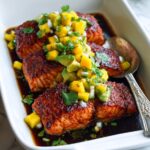
Delicious Recipe
- Prep Time: 20 minutes
- Marinating Time: 45 minutes
- Cook Time: 10 minutes
- Total Time: 1 hour 15 minutes
- Yield: 4 servings 1x
- Category: Main Course
- Method: Frying
- Cuisine: Fusion
- Diet: Low Lactose
Description
Easy Mango Teriyaki Salmon features wild salmon fillets marinated in a sweet and savory maple teriyaki sauce, pan-fried to a perfect golden brown, and topped with a fresh, zesty mango salsa. This dish offers a beautiful balance of flavors and textures, perfect for a quick and impressive dinner.
Ingredients
Salmon
- 2 pounds wild salmon, portioned
Maple Teriyaki Sauce
- ¼ cup soy sauce
- ¼ cup pure maple syrup
- ¼ cup water
- 1 tbsp sesame seed oil
- 1 tbsp rice vinegar
- 1 tbsp ginger puree
- 5 to 6 garlic cloves, pressed or very finely minced
Mango Salsa
- 2 medium ripe mangos
- 1 large avocado
- 2 medium tomatoes
- 1 small red onion, or large shallot
- small bunch fresh cilantro, chopped
- juice from 2 limes
- salt, to taste
- 2 tbsp olive oil
Instructions
- Prepare the Teriyaki Sauce: In a large measuring cup, whisk together the soy sauce, maple syrup, water, ginger puree, pressed garlic, sesame seed oil, and rice vinegar until well combined.
- Marinate the Salmon: Portion the salmon into serving-size fillets if needed. Place the salmon in a large, deep casserole dish and pour the prepared teriyaki sauce over the top. Cover and refrigerate for 15 to 45 minutes to allow flavors to meld.
- Prepare the Mango Salsa: While the salmon marinates, peel and dice the mangos and avocado into pea-sized pieces. Seed and dice the tomatoes, dice the onion, and chop the cilantro. Combine all these ingredients in a large mixing bowl but hold off on dressing until later.
- Reduce the Teriyaki Sauce: Remove the salmon from the marinade and place it on a tray lined with paper towels. Pat the fillets lightly to dry them. Pour the remaining marinade into a small saucepan, bring it to a simmer, then cook over low heat for about 10 minutes until thickened and reduced.
- Cook the Salmon: Heat a large frying pan over medium-high heat and add a few tablespoons of avocado oil. Once the oil is very hot, add the salmon fillets skin-side down. Fry each side for a few minutes until nicely browned and cooked through. Thinner fillets will cook faster. Remove the salmon and set it on a wire rack to rest.
- Finish the Mango Salsa: Squeeze fresh lime juice over the salsa mixture, season with salt, and drizzle with olive oil. Toss gently with a large spoon to combine all flavors.
- Serve: Plate the salmon, spoon the reduced teriyaki sauce over the top, and add generous spoonfuls of mango salsa. Serve immediately, optionally with steamed white rice on the side.
Notes
- Marinating the salmon for longer enhances flavor but do not exceed 45 minutes to avoid fish breaking down.
- Use ripe mangos and avocado for the best salsa texture and sweetness.
- If you prefer, grill the salmon instead of pan-frying for a smoky twist.
- For a gluten-free version, substitute soy sauce with tamari or coconut aminos.
- Leftover salsa can be refrigerated for up to one day but is best fresh.
- Use avocado oil or another high smoke point oil for frying the salmon to prevent burning.
Nutrition
- Serving Size: 1 serving
- Calories: 652 kcal
- Sugar: 30 g
- Sodium: 924 mg
- Fat: 33 g
- Saturated Fat: 5 g
- Unsaturated Fat: 25 g
- Trans Fat: 0 g
- Carbohydrates: 40 g
- Fiber: 6 g
- Protein: 49 g
- Cholesterol: 125 mg

Leave a Reply