
There's something truly irresistible about the tangy sweetness paired with rich, crispy duck in this classic French dish. This Duck à l'Orange Recipe strikes that perfect balance between savory and bright flavors, making it a show-stopping meal that's easier to pull off than you might think.

Jump to:
Why You'll Love This Recipe
I still remember the first time I made this Duck à l'Orange Recipe at home — the aroma alone had me hooked! It’s not just a fancy dish for special occasions; it’s approachable for any home cook willing to give it a try. The combination of crispy duck skin with a smooth, citrusy sauce? Pure magic.
- Classic Flavor Profile: The blend of Seville orange marmalade and zest gives the sauce that authentic tangy sweetness that lifts the rich duck perfectly.
- Simple Yet Elegant: Uses just a few accessible ingredients but results in a dish that looks and tastes gourmet.
- Time-Friendly: This recipe uses duck breasts instead of a whole duck, slashing cook time without sacrificing flavor.
- Great for Impressing Guests: Whether it’s date night or a dinner party, this dish always sparks compliments.
Ingredients & Why They Work
Every ingredient in this Duck à l'Orange Recipe plays a unique role to build layers of flavor — from the richness of the duck fat to the bright punch of orange zest. Picking good-quality duck breasts and fresh oranges is key to getting the best results.
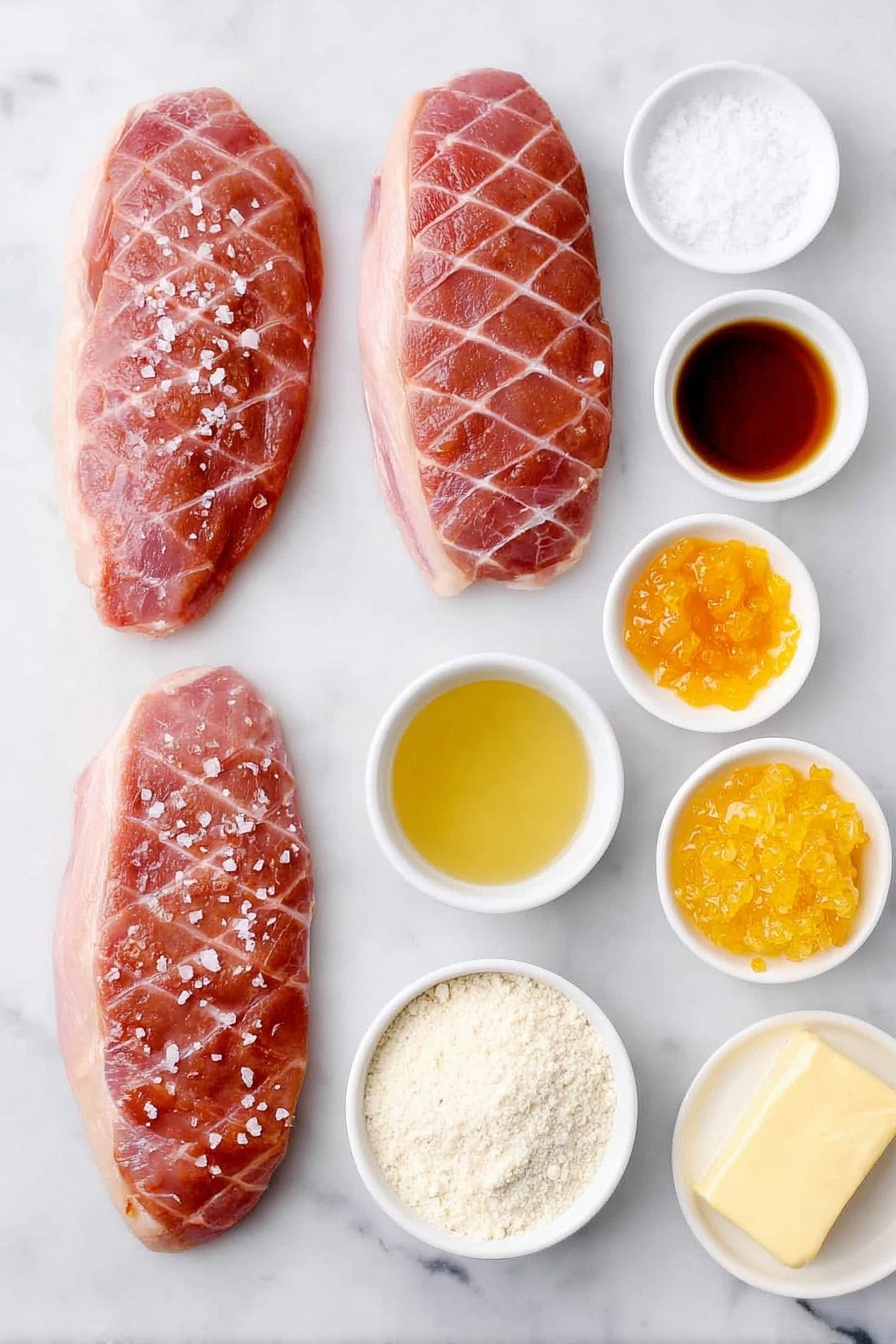
- Duck breast halves: Ideal for crisping skin perfectly while keeping the meat tender and juicy.
- Salt: Enhances the natural flavors and draws out some moisture from the skin to help it crisp up.
- Chicken broth: Adds a savory depth to balance the sweet and tart notes in the sauce.
- Orange liqueur (such as Grand Marnier®): Infuses the sauce with aromatic citrus warmth and a hint of sophistication.
- Sherry vinegar: Brings a subtle acidity that brightens the sauce without overpowering it.
- Seville orange marmalade: Key to authentic orange flavor with just the right touch of bitterness.
- Grated orange zest: Adds fresh citrus oils for vivid aroma and flavor boost.
- Cayenne pepper: Just a pinch for a gentle spicy kick that cuts through the sweetness.
- Reserved duck fat: Essential for cooking the duck skin to crispy perfection.
- All-purpose flour: Used to thicken the sauce and give it a nice glossy finish.
- Butter: Enriches the sauce, rounding out the flavors and adding silkiness.
Make It Your Way
I love tweaking this recipe depending on the season or what I have on hand, and I encourage you to do the same! Whether you want it a bit sweeter, tangier, or spicier, there’s room to make this Duck à l'Orange Recipe your own culinary signature.
- Variation: Sometimes I add a splash of fresh orange juice to the sauce for extra brightness — it really brings the citrus to life.
- Diet-friendly swap: If you want to skip alcohol, just replace the orange liqueur with fresh orange juice and a splash more sherry vinegar.
- Spice it up: Add more cayenne or a pinch of smoked paprika for a smoky twist on the classic.
Step-by-Step: How I Make Duck à l'Orange Recipe
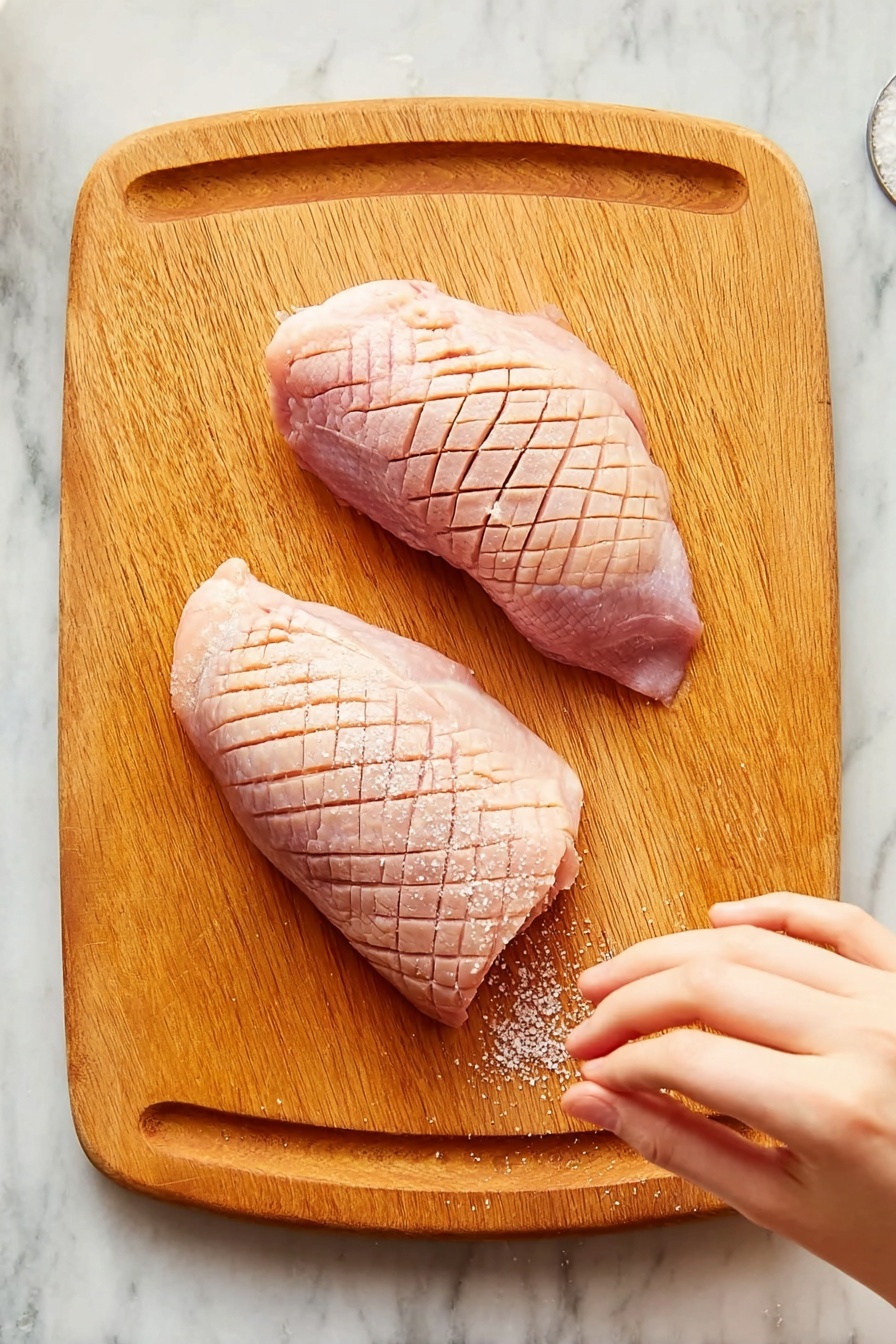
Step 1: Prepping the Duck for Crispy Skin
Start by scoring the duck skin in a crosshatch pattern, almost cutting through but not quite. This helps render the fat and crisps the skin beautifully. Don’t rush this part — a good score makes a huge difference! Then, salt generously and let it rest skin-side up, which ensures the salt soaks in and the skin dries a bit for that perfect crunch.
Step 2: Whisking the Orange Sauce
While the duck rests, whisk together chicken broth, orange liqueur, sherry vinegar, Seville orange marmalade, grated orange zest, and cayenne pepper. This blend is your bright, tangy sauce base that brings all the flavors together later on. Trust me, making this ahead of time saves you from any last-minute sauce scrambling.
Step 3: Cooking the Duck to Perfection
Pat the duck dry again and salt the skin side once more before heating the reserved duck fat in your skillet. Place the duck skin-side down and let it cook undisturbed over medium heat until the skin crisps and fat renders out — about 6 minutes. Flip and cook the other side just until medium rare, juicy and reddish-pink inside (about 4 minutes). I always use an instant-read thermometer; 140°F is the sweet spot!
Step 4: Making the Orange Sauce
Once the duck rests, add flour to your skillet and stir quickly to incorporate — this helps thicken your sauce. Pour in the orange mixture and let it boil and reduce until thick and glossy. To finish, stir in butter off the heat for a velvety texture. Taste and adjust salt — this step is crucial since savory balance makes or breaks the sauce!
Step 5: Serving It Up
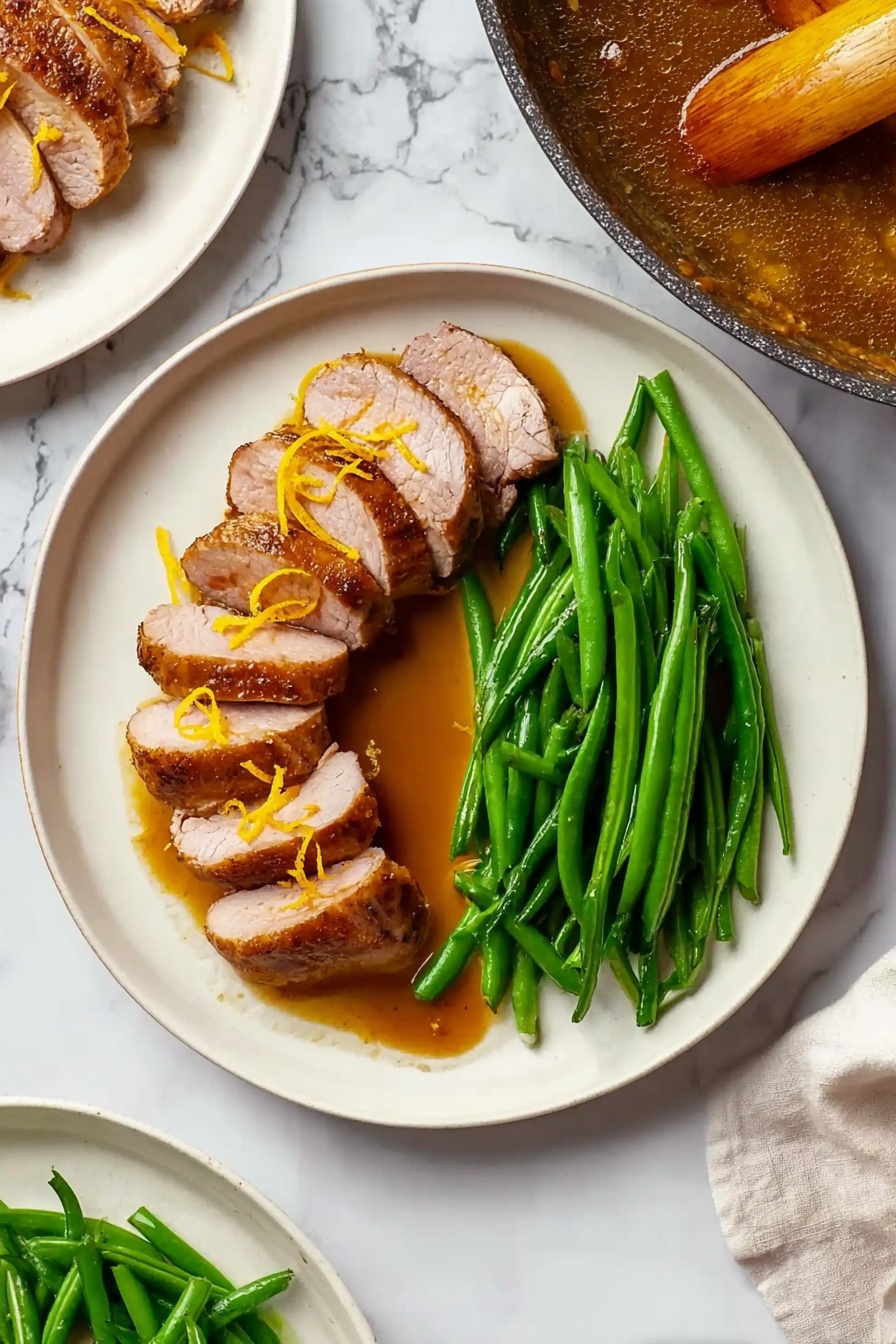
Slice the duck across the grain for tenderness, plate it, and generously spoon the luscious orange sauce over the top. A few thin strips of fresh orange zest on the side add a decorative and fragrant touch — they always spark compliments at my table.
Top Tip
I’ve found a few little tricks that push this Duck à l'Orange Recipe from great to unforgettable. These emerged after some trial and error in my own kitchen — hopefully they save you some guesswork!
- Score the Skin Well: Don’t be shy with your knife marks; this lets fat render truly well, leading to that dream crispy skin texture.
- Dry Duck Thoroughly: Patting the breasts dry multiple times before cooking really helps the skin crisp instead of steam.
- Use a Thermometer: Cooking duck perfectly can be tricky — an instant-read thermometer ensures you get medium rare every time, avoiding dryness.
- Finish Sauce with Butter Off Heat: Adding butter after you remove the pan from the heat gives you a luxuriously smooth sauce without breaking.
How to Serve Duck à l'Orange Recipe
Garnishes
I keep it simple here with thin, fresh orange zest strips and occasionally add a sprig of thyme or parsley for color and a subtle herbaceous note. It’s a small touch that elevates the presentation and flavor without stealing the spotlight from that velvety sauce.
Side Dishes
My go-to sides are buttery mashed potatoes or creamy polenta — the smooth starch soaks up the orange sauce like a dream. Roasted asparagus or green beans tossed with lemon and garlic complement the duck’s richness beautifully. If you want something lighter, a crisp salad with citrus segments adds fresh crunch and balance.
Creative Ways to Present
For dinner parties, I sometimes plate the sliced duck over a bed of wild rice with a drizzle of sauce artistically around. Another favorite is serving the duck atop crepes or thin pancakes—kind of a playful twist that still feels very French! A sprinkle of toasted almonds or pistachios adds unexpected texture that guests love.
Make Ahead and Storage
Storing Leftovers
I wrap leftover duck breasts tightly in foil or plastic wrap and keep them in an airtight container in the fridge. The sauce stores separately in a glass jar. This helps keep flavors fresh and stops the skin from getting soggy.
Freezing
I’ve frozen leftover duck and sauce successfully. For best results, freeze the meat and sauce separately in sealed containers. When reheating, defrost overnight in the fridge to maintain texture and flavor integrity.
Reheating
Reheat the duck gently in a low oven (around 300°F) wrapped in foil to keep it moist. Warm the sauce gently on the stovetop, stirring occasionally. This way, you get close to fresh-cooked quality without drying out the meat or breaking the sauce.
Frequently Asked Questions:
Duck breasts are ideal because they cook faster than a whole duck and allow you to get that coveted crispy skin with juicy meat inside. Using duck breasts also makes the recipe more manageable for a weeknight or smaller meal.
Absolutely! You can prepare the orange sauce up to a day in advance and gently reheat it on the stove before serving. Just be sure to whisk it well to recombine any separated ingredients for that smooth, glossy finish.
Scoring the skin in a crosshatch pattern and patting it dry before cooking are essential steps. Also, cooking the duck skin-side down slowly over medium heat lets the fat render out gently and crisps the skin perfectly without burning. Patience is key!
Rich, creamy sides like mashed potatoes or polenta work beautifully to soak up the sauce, while roasted or sautéed green vegetables add fresh contrast. A crisp citrus salad also pairs nicely for a lighter option.
Final Thoughts
This Duck à l'Orange Recipe holds a special place in my heart because it reminds me that French cuisine doesn’t have to feel intimidating. With a few simple ingredients and some patient technique, you get a dish that impresses without stress. I hope you enjoy making it just as much as I enjoy sharing it with you — it’s perfect for those moments when you want something a little extra special, yet totally doable in your own kitchen.
Print
Duck à l'Orange Recipe
- Prep Time: 15 minutes
- Cook Time: 20 minutes
- Total Time: 35 minutes
- Yield: 2 servings 1x
- Category: Main Course
- Method: Stovetop
- Cuisine: French
Description
Duck à l'Orange is a classic French dish featuring succulent duck breast served with a tangy and sweet orange sauce. This recipe uses duck breasts for a quicker preparation while delivering rich flavors of crispy skin and a luscious citrus glaze.
Ingredients
Duck
- 2 duck breast halves
- salt to taste
- 1 tablespoon reserved duck fat
- 1 tablespoon butter
- 1 teaspoon all-purpose flour
Orange Sauce
- 1 cup chicken broth
- 2 tablespoons orange liqueur (such as Grand Marnier®)
- 1 tablespoon sherry vinegar
- 1 tablespoon Seville orange marmalade, or more to taste
- 2 teaspoons grated orange zest
- 1 pinch cayenne pepper
Instructions
- Prepare Ingredients: Gather all ingredients needed for the recipe and set them aside for easy access during cooking.
- Score and Season Duck: Score the duck skin diagonally in a crosshatch pattern without cutting into the meat. Generously season with salt and rub it into the skin. Let the duck breasts rest skin-side up at room temperature for 15 minutes to enhance flavor and texture.
- Make Orange Sauce Mixture: In a small bowl, whisk together chicken broth, orange liqueur, sherry vinegar, orange marmalade, grated orange zest, and a pinch of cayenne pepper. Set aside.
- Dry and Re-season Duck: Pat the duck breasts dry with paper towels to ensure crisp skin. Re-season the skin side with salt to enhance seasoning.
- Cook Duck Skin Side Down: Heat reserved duck fat in a heavy skillet over medium heat for 2 minutes. Place duck breasts skin side down and cook for about 6 minutes until the fat renders and the skin crisps to golden brown.
- Cook Duck on Other Side: Flip the duck breasts and cook for an additional 4 minutes, until the meat firms up but is still reddish-pink and juicy inside. Confirm doneness with an instant-read thermometer registering 140 degrees F (60 degrees C). Remove the duck breasts and let rest on a plate.
- Prepare Sauce in Skillet: Return the skillet to medium heat. Whisk in the flour and cook for about 1 minute until fully incorporated to form a roux. Pour the orange sauce mixture into the skillet and bring to a boil. Cook for 3 to 5 minutes until the sauce thickens and reduces.
- Finish Sauce: Reduce heat to low. Once the sauce stops bubbling, stir in the butter until fully melted and incorporated. Season the sauce with salt to taste.
- Serve: Slice the rested duck breasts across the grain. Arrange the slices on a plate and spoon the orange sauce over the top. Garnish with thin strips of orange zest. Serve immediately and enjoy.
Notes
- Using duck breasts instead of a whole duck makes the recipe quicker and easier while still delivering great flavor.
- Scoring the duck skin helps render fat and crisp the skin evenly.
- If duck fat is unavailable, you can substitute with a high smoke point oil like vegetable or canola oil, though duck fat is preferred for flavor.
- Adjust orange marmalade quantity according to your desired sweetness.
- Resting the duck after cooking allows juices to redistribute for a juicier result.
- Use an instant-read thermometer to avoid overcooking the duck breast.
Nutrition
- Serving Size: 1 serving
- Calories: 354 kcal
- Sugar: 12 g
- Sodium: 593 mg
- Fat: 21 g
- Saturated Fat: 8 g
- Unsaturated Fat: 0 g
- Trans Fat: 0 g
- Carbohydrates: 15 g
- Fiber: 0 g
- Protein: 20 g
- Cholesterol: 130 mg

Leave a Reply