
Crispy outside, juicy inside, and bursting with sweet tangy flavor—this Honey Dijon Garlic Chicken Breasts Recipe is one of those dishes you’ll want to make again and again. It’s simple enough for a weeknight but elegant enough to serve guests without breaking a sweat.

Jump to:
Why You'll Love This Recipe
Honestly, I first stumbled upon this Honey Dijon Garlic Chicken Breasts Recipe when I needed something quick but flavorful, and it immediately became a kitchen favorite. It’s got a perfect balance of tangy, sweet, and garlicky notes that makes every bite feel special.
- Easy-to-follow steps: You'll appreciate how straightforward this recipe is, making it a stress-free meal any day.
- Flavor-packed glaze: The honey and Dijon mustard combo with garlic creates a mouthwatering sauce that sticks to the chicken perfectly.
- Juicy and tender chicken: Baking the breasts the right way keeps them moist, so you never get that dry, boring bite.
- Minimal ingredients: You likely already have everything on hand, so no extra grocery run needed.
Ingredients & Why They Work
Each ingredient in this Honey Dijon Garlic Chicken Breasts Recipe plays a vital role in building that delicious flavor profile while keeping the dish simple. Here’s why these ingredients come together so well and a few tips on picking the best versions for your kitchen.

- Boneless skinless chicken breasts: Choose evenly sized breasts for consistent cooking; I find about 6 ounces each works perfectly.
- Butter: Adds a lovely richness to the glaze, making it silky and flavorful.
- Garlic: Fresh cloves give that fragrant aroma and punch—minced finely is best so it melds seamlessly into the glaze.
- Salt and pepper: Simple seasoning enhances the natural chicken flavor and balances the sweet glaze.
- Honey: Use good quality honey; it’s the star that brings the perfect touch of sweetness and helps caramelize the chicken beautifully.
- Whole grain Dijon mustard: Its tanginess and texture add depth and complexity, making the glaze irresistible.
Make It Your Way
I love tweaking this Honey Dijon Garlic Chicken Breasts Recipe depending on what mood I’m in or what’s in my pantry. It’s a great base for experimenting, and you can easily boost the flavors or make it friendlier for different diets.
- Variation: Adding a splash of lemon juice or zest brightens up the glaze beautifully; I tried this once for a summer dinner and it gave a fresh twist I adored.
- For spice lovers: Stir in some chili flakes or cayenne pepper when making the glaze for a subtle kick.
- Low-sodium option: You can cut back or omit added salt if you’re watching sodium; sometimes, the honey and mustard combo carry enough flavor on their own.
- Herbal notes: Adding fresh thyme or rosemary before baking adds an earthy aroma that pairs wonderfully with the glaze.
Step-by-Step: How I Make Honey Dijon Garlic Chicken Breasts Recipe

Step 1: Prep and Heat the Pan
Start by lining an 8x8 inch baking pan with aluminum foil—this keeps cleanup super easy. It’s important to pick a pan size that fits the chicken tightly but leaves a half-inch space around each piece. I once used a bigger dish, and the glaze was too thin and burned easily. Pop the empty pan into a 425°F oven to heat it while you get the glaze ready.
Step 2: Make the Glaze
Melt butter gently in a small sauté pan, then add the minced garlic. Cook just 30 to 60 seconds—just enough to soften but not brown it. If the garlic browns, it can turn bitter, so watch closely! Next, stir in the honey, Dijon mustard, and a pinch of salt and pepper. Let it simmer over medium heat for a minute or two. The glaze will slightly reduce, thickening just enough to cling to the chicken beautifully.
Step 3: Season and Arrange Chicken
Lightly season your chicken breasts with salt and pepper. Take the hot pan from the oven (watch those fingers!) and place the chicken evenly spaced inside. Pour the hot glaze all over, making sure every piece gets a nice shine.
Step 4: Bake and Baste
Bake at 425°F for 15 minutes, then pull the pan out and baste the chicken with the glaze pooled at the bottom. This step seals in flavor and keeps things moist. Back it goes into the oven for another 15 to 20 minutes—use a meat thermometer to check the thickest part of the breast. When it hits 170°F, you’re good to go.
Step 5: Rest Before Serving
After baking, let the chicken rest for 5 minutes. This step is key—it lets all those juicy juices redistribute so every bite is tender and satisfying.
Top Tip
Having made this Honey Dijon Garlic Chicken Breasts Recipe a dozen times, I learned a few little tricks that make a big difference. These tips will help you get the best flavor and texture every single time.
- Preheating the pan: Putting the foil-lined pan in the oven while you make the glaze prevents the glaze from absorbing too quickly into the pan and burning.
- Watch the garlic: Garlic cooks fast—soften but don't brown it to avoid bitterness in your glaze.
- Baste mid-cook: Basting half-way through locks in moisture and ensures the glaze is rich and sticky, not dried out.
- Use a meat thermometer: Chicken breasts can dry out fast, so checking for that 170°F mark is essential for juicy results.
How to Serve Honey Dijon Garlic Chicken Breasts Recipe

Garnishes
I usually sprinkle freshly chopped parsley on top for a pop of color and freshness—it complements the sweet-tangy glaze nicely. Sometimes a squeeze of lemon juice right before serving brightens the whole plate.
Side Dishes
This chicken pairs perfectly with roasted veggies like asparagus or green beans. I’m also a fan of a simple buttered rice or creamy mashed potatoes to soak up that delicious glaze—comfort food at its best.
Creative Ways to Present
For a dinner party, I’ve served this sliced over a bed of garlic herb quinoa with microgreens sprinkled on top. It’s elegant and adds a lovely texture contrast that guests always ask about!
Make Ahead and Storage
Storing Leftovers
I tightly wrap leftover chicken or pop it into an airtight container and refrigerate for up to 3 days. The glaze thickens in the fridge, making the leftovers even more flavorful after a day.
Freezing
This recipe freezes well if you want to stash cooked chicken for later. Wrap each breast in foil before freezing to protect the glaze and maintain moistness. Thaw overnight in the fridge before reheating.
Reheating
To reheat, I find the best way is gently warming in a splash of broth or water over low heat on the stove, covered, to keep the chicken juicy. Microwave works in a pinch but can dry things out faster.
Frequently Asked Questions:
Absolutely! Chicken thighs will be juicier and might even need a slightly longer cook time. Just keep an eye on internal temperature to ensure doneness.
Regular Dijon mustard works great as a substitute; it just won’t have the textured mustard seeds but the flavor remains delightful.
Yes! All the ingredients used here are naturally gluten-free, but just double check your mustard brand to be sure it doesn’t contain any additives with gluten.
Cutting into the thickest part should reveal no pink, and the juices should run clear. However, investing in a meat thermometer really helps for perfect results and food safety.
Final Thoughts
This Honey Dijon Garlic Chicken Breasts Recipe is one of those dependable go-tos that always impress. It’s simple, satisfying, and full of flavor with minimal fuss. When I want something comforting but not complicated, I know I can turn to this recipe—and I’m sure once you try it, you’ll feel the same way!
Print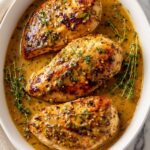
Delicious Recipe
- Prep Time: 10 minutes
- Rest Time: 5 minutes
- Cook Time: 35 minutes
- Total Time: 45 minutes
- Yield: 4 servings 1x
- Category: Main Course
- Method: Baking
- Cuisine: American
Description
Honey Dijon Garlic Chicken Breasts is a flavorful and easy-to-make baked chicken recipe. Tender boneless chicken breasts are glazed with a delicious mixture of honey, whole grain Dijon mustard, butter, and garlic, then baked to juicy perfection with a beautifully caramelized glaze.
Ingredients
Chicken
- 4 large boneless skinless chicken breasts, about 6 ounces each
Glaze
- 3 tbsp butter
- 6 cloves minced garlic
- pinch salt and pepper
- ⅓ cup honey
- 2 tbsp whole grain Dijon mustard
Instructions
- Preheat and prepare pan: Line an 8x8 inch baking pan with aluminum foil. Use a pan with just enough space for the chicken breasts, approximately half an inch around each piece, to prevent the glaze from burning due to over-thin coverage. Place the empty pan into a 425 degree F oven to heat while you prepare the glaze.
- Make the glaze: Melt the butter in a small sauté pan over medium heat. Add the minced garlic and cook for 30 to 60 seconds, just until softened but not browned. Stir in the honey, whole grain Dijon mustard, and a pinch of salt and pepper. Simmer the mixture for 1 to 2 minutes to slightly reduce and thicken the glaze.
- Season and arrange chicken: Lightly season the chicken breasts with salt and pepper. Remove the hot baking pan from the oven and arrange the chicken breasts evenly spaced in the pan.
- Apply glaze and bake: Pour the hot glaze evenly over the chicken breasts. Return the pan to the 425 degree F oven and bake for 15 minutes.
- Baste and continue baking: Remove the pan from the oven and baste the chicken breasts with the glaze pooled in the bottom of the pan. Return to the oven and bake for an additional 15 to 20 minutes, or until an instant-read thermometer inserted into the thickest part of the chicken reads 170 degrees F.
- Rest the chicken: Remove the chicken breasts from the oven and allow them to rest for 5 minutes before serving, allowing the juices to redistribute for optimal tenderness.
Notes
- Use a baking pan that fits the chicken snugly to prevent glaze from burning.
- Be careful not to brown the garlic while making the glaze, as it can turn bitter.
- Make sure to baste the chicken halfway through baking for extra flavor and moisture.
- Check the internal temperature to avoid overcooking; 170 degrees F is safe for chicken breasts.
- Leftover glaze can be stirred and served as a dipping sauce or drizzled over vegetables.
Nutrition
- Serving Size: 1 chicken breast with glaze
- Calories: 350 kcal
- Sugar: 10 g
- Sodium: 240 mg
- Fat: 18 g
- Saturated Fat: 10 g
- Unsaturated Fat: 7 g
- Trans Fat: 0 g
- Carbohydrates: 18 g
- Fiber: 0 g
- Protein: 32 g
- Cholesterol: 110 mg

Leave a Reply