
There’s nothing quite like the sizzle and vibrant colors coming together in a stir-fry. This Beef Stir-Fry with Fresh Vegetables Recipe brings that satisfying crunch and tender beef combo right to your table. It’s quick, fresh, and bursting with flavor – a perfect dish to brighten up any weeknight.

Jump to:
- Why You'll Love This Recipe
- Ingredients & Why They Work
- Make It Your Way
- Step-by-Step: How I Make Beef Stir-Fry with Fresh Vegetables Recipe
- Top Tip
- How to Serve Beef Stir-Fry with Fresh Vegetables Recipe
- Make Ahead and Storage
- Frequently Asked Questions:
- Final Thoughts
- Beef Stir-Fry with Fresh Vegetables Recipe
Why You'll Love This Recipe
I’ve made this beef stir-fry more times than I can count, and honestly, it’s become one of my kitchen go-tos for busy nights. The balance of tender flank steak with crisp, fresh veggies is just unbeatable, plus the sauce ties everything together so beautifully.
- Speedy Weeknight Meal: You’ll have dinner on the table in under 40 minutes without sacrificing any flavor.
- Fresh & Flexible Ingredients: Using bok choy, mushrooms, and snap peas gives plenty of texture but feel free to swap veggies you prefer or have on hand.
- Rich, Balanced Sauce: The light and dark soy, oyster sauce, and Shaoxing wine create a savory layer that’s just irresistible.
- Perfectly Tender Beef: Marinating the flank steak with cornstarch and baking soda makes it incredibly soft and juicy every time.
Ingredients & Why They Work
This recipe truly shines because of the harmony between each ingredient. The choice of flank steak is key—it’s lean but tender when sliced properly and marinated well. The vibrant crunch from fresh bok choy, mushrooms, and snap peas keeps each bite lively. And the sauce ingredients are pantry staples that build layers of umami and sweetness.

- Flank steak: Slice thin and against the grain to maximize tenderness; the ⅛-inch thickness cooks quickly and stays juicy.
- Cornstarch: Essential for velveting the beef—this helps create that silky texture and locks in moisture.
- Baking soda: A slight tenderizer that works wonders when combined with cornstarch in the marinade.
- Bok choy: Adds mild bitterness and crunch; cutting into manageable pieces makes it easier to stir-fry evenly.
- Bunashimeji (Beech) mushrooms: Their firm texture holds up well in quick stir-frying and brings earthiness.
- Sugar snap peas: Sweet, crisp pods that contrast perfectly with the soft mushrooms and beef.
- Soy sauces (light & dark): Provide the salty, umami base—with dark soy adding color and depth.
- Oyster sauce: Gives a subtle richness and a touch of sweetness that pulls the flavors together.
- Shaoxing wine: A splash lifts the flavor, adding complexity and a slight tang.
- Ginger & garlic: Classic aromatics to brighten the dish and cut through richness.
- Neutral oils: Use high-heat tolerant oils like vegetable or avocado to get that satisfying sear without smoking.
Make It Your Way
One of the best parts about this Beef Stir-Fry with Fresh Vegetables Recipe is how you can really tailor it to your tastes or pantry. I've switched up veggies and even swapped flank steak for chicken sometimes, and it’s delicious every time.
- Variation: I once swapped in bell peppers and broccoli for a more colorful version, and my family loved the change—it’s all about fresh, crisp veggies you enjoy.
- Make it gluten-free: Just use tamari instead of soy sauce to keep that deep umami flavor without gluten.
- Spicy kick: Feel free to toss in some sliced chili or a dash of chili oil if you prefer heat.
- Vegan twist: Replace beef with firm tofu or tempeh and use mushroom sauce to keep the umami punch.
Step-by-Step: How I Make Beef Stir-Fry with Fresh Vegetables Recipe

Step 1: Marinate the Beef for Tenderness
Start by mixing the flank steak slices with cornstarch, oil, water, and baking soda. I like to use a bowl large enough to toss everything easily to coat every piece. Let it rest for at least 30 minutes; overnight if you have the time. This step is crucial—it softens the meat and gives you that melt-in-your-mouth texture every time.
Step 2: Prep Fresh Vegetables
While the beef marinates, get your veggies ready. Cut the bok choy into bite-sized pieces, wash your mushrooms and peas thoroughly, and drain them well. Keeping the pieces uniform helps everything cook evenly, and you’ll want to avoid soggy stir-fry by properly drying your vegetables.
Step 3: Mix Up the Flavorful Sauce
In a small bowl, whisk together warm water (or stock), sesame oil, light and dark soy sauces, oyster sauce, and a touch of sugar. This combo delivers a taste that’s rich, slightly sweet, and perfectly balanced—trust me, it’s the secret behind the recipe’s irresistible flavor.
Step 4: Sear the Beef
Heat your wok or skillet on high until it just starts to smoke—this is essential for that quick sear. Add 2 tablespoons of oil around the edges, then add the beef in a single layer. Let it sear untouched for 30 seconds to get a nice crust, then flip and sear for another 30 seconds. Don’t overcook here—the beef will finish cooking later. Remove the beef and set aside.
Step 5: Stir-Fry Aromatics and Vegetables
Turn the heat back on high and add the remaining tablespoon of oil, then toss in minced ginger—just 10 seconds to release its fragrance. Add garlic next and cook briefly, then add your mushrooms and stir-fry until they start to brown, about 15 seconds. Splash in Shaoxing wine to deglaze and add flavor. Now, throw in the snap peas and bok choy, stir-frying on full blast until the bok choy just begins to wilt—another 20 seconds or so.
Step 6: Bring It All Together
Pour in your prepared sauce, add the beef back to the wok, and gather everything in the center. When the sauce starts to simmer and the wok sides heat up, use quick circular motions to toss everything so the beef and veggies kiss the hot wok sides. Then pour in the cornstarch slurry and stir fast as the sauce thickens, coating everything beautifully. This final glossy finish ties the whole dish together.
Top Tip
Over the years, I’ve learned a few tricks with this Beef Stir-Fry with Fresh Vegetables Recipe that really help nail the texture and flavor every time. These tips have saved me from soggy veggies or tough beef on more than one occasion!
- Marinate Longer: If possible, marinate the beef overnight. The baking soda has more time to tenderize, giving you an even silkier bite.
- High Heat is Essential: Always preheat your wok or pan until it’s almost smoking. Stir-frying is a quick, high-heat method—you want that sear and fast cooking.
- Don’t Overcrowd: Cook beef and veggies in batches if your pan is small. Crowding releases water, which leads to steaming, not stir-frying.
- Fast Stirring After Slurry: Once you add the cornstarch slurry, stir quickly and consistently to avoid clumps and ensure a glossy sauce coating.
How to Serve Beef Stir-Fry with Fresh Vegetables Recipe

Garnishes
I usually finish with a sprinkle of toasted sesame seeds and some thinly sliced scallions. The sesame seeds add a lovely nutty crunch, while the scallions bring freshness and a pop of green that brightens the plate visually and flavor-wise.
Side Dishes
My go-to sides are steamed jasmine rice or even simple garlic fried rice to soak up the sauce. Sometimes, I’ll pair it with a light cucumber salad to add a cool, crisp contrast to the warm stir-fry.
Creative Ways to Present
For special occasions, I love serving this stir-fry over a bed of sizzling black rice in a cast iron skillet, garnished with fresh herbs like cilantro and mint. It adds color and a bit of drama to the table—a fun way to impress guests without extra fuss.
Make Ahead and Storage
Storing Leftovers
Leftover beef stir-fry stores beautifully—just pop it into an airtight container and refrigerate. I usually use it within 2 days to keep the veggies crisp and the beef tender.
Freezing
Freezing is possible but I recommend freezing the beef and veggies separately if you want the best texture. Mushrooms and bok choy can get a bit watery after freezing, so fresh is always better. Still, it’s convenient for meal prep if you’re short on time!
Reheating
To reheat, I prefer warming it in a hot skillet over medium heat with a splash of water or stock to revive the sauce and veggies. Microwaving is quicker but can sometimes turn the beef a little tough, so go stovetop if you have time.
Frequently Asked Questions:
Absolutely! Flank steak is ideal for its tenderness and quick cooking, but you can also use sirloin or skirt steak. Just be sure to slice thinly against the grain for best results.
You can substitute dry sherry or even a splash of mirin or white wine. If you prefer a non-alcoholic option, a bit of chicken or beef stock with a splash of rice vinegar can work well, too.
Make sure to wash and thoroughly dry your vegetables before stir-frying. Cook on high heat without overcrowding the pan, and add the veggies in stages based on cooking times to keep them crisp.
Yes! Swap the beef for firm tofu or tempeh, and use vegetarian oyster sauce or mushroom sauce for that savory umami flavor. The fresh veggies and sauce combo remain delicious with this change.
Final Thoughts
This Beef Stir-Fry with Fresh Vegetables Recipe has become such a comforting, trusty option for me when I want something that’s fast, flavorful, and just downright satisfying. I feel confident recommending it to you because the steps are straightforward and the flavors so dependable. Give it a try—you might find it’s a new favorite for your dinner rotation, just like it is for me.
Print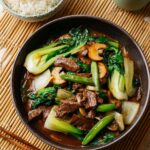
Beef Stir-Fry with Fresh Vegetables Recipe
- Prep Time: 30 minutes
- Cook Time: 10 minutes
- Total Time: 40 minutes
- Yield: 3 servings 1x
- Category: Main Course
- Method: Stovetop
- Cuisine: Chinese
Description
A quick and flavorful Beef Stir-Fry with fresh vegetables like bok choy, mushrooms, and snap peas, coated in a savory oyster and soy sauce-based glaze. Perfect for a healthy weeknight dinner packed with protein and vibrant veggies.
Ingredients
Beef and Marinade
- 12 ounces flank steak, sliced ⅛-inch thick into 2-3 inch pieces
- 1 teaspoon cornstarch
- 2 teaspoons neutral oil (vegetable, canola, or avocado oil)
- 1 teaspoon water
- ¼ teaspoon baking soda
Vegetables
- 4 cups bok choy, cut into 1x3-inch pieces, washed and drained
- ¾ cup Bunashimeji or Beech mushrooms, washed and drained
- ¾ cup sugar snap peas or snow peas, washed and drained
Sauce
- ½ cup warm water (or beef stock or chicken stock)
- ¼ teaspoon sesame oil
- 2 teaspoons light soy sauce
- 1 teaspoon dark soy sauce
- 1 tablespoon oyster sauce
- ¼ teaspoon sugar
Others
- 3 tablespoons neutral oil (vegetable, canola, or avocado oil), divided
- ½ teaspoon minced ginger
- 2 cloves garlic, finely minced
- 1 tablespoon Shaoxing wine
- 2 teaspoons cornstarch mixed with 1 tablespoon water (cornstarch slurry)
Instructions
- Marinate the Beef: Mix the flank steak slices with 1 teaspoon cornstarch, 2 teaspoons neutral oil, 1 teaspoon water, and ¼ teaspoon baking soda until well-coated. Set aside to marinate for at least 30 minutes or overnight if preparing ahead.
- Prepare the Vegetables: Wash and drain the bok choy, mushrooms, and snap peas, cutting the bok choy into 1x3-inch pieces. Set aside.
- Make the Sauce: In a small bowl, combine ½ cup warm water (or stock), ¼ teaspoon sesame oil, 2 teaspoons light soy sauce, 1 teaspoon dark soy sauce, 1 tablespoon oyster sauce, and ¼ teaspoon sugar. Stir well and set aside.
- Sear the Beef: Heat a wok over high heat until lightly smoking. Spread 2 tablespoons of oil around the perimeter. Add the marinated beef in an even layer. Sear for 30 seconds, then flip and sear the other side for an additional 30 seconds until about 80% cooked. Remove beef from wok and turn off heat temporarily.
- Stir-Fry Aromatics and Mushrooms: Turn the heat back to high, add the remaining 1 tablespoon oil and minced ginger. Cook for 10 seconds, add garlic and cook for 5 seconds. Add mushrooms and stir-fry for 15 seconds to sear. Pour in Shaoxing wine.
- Add Vegetables: Add snap peas and bok choy to the wok. Stir-fry on highest heat for 20 seconds until bok choy starts to wilt.
- Add Sauce and Beef: Pour the prepared sauce mixture into the wok and return the beef to the center. Gather all ingredients together in the center and let return to a simmer while stirring in a circular motion so beef and vegetables contact the wok sides.
- Thicken the Sauce: Quickly pour the cornstarch slurry into the center while stirring continuously. Stir-fry for another 20 seconds until the sauce thickens and coats the beef and vegetables evenly without pooling.
- Serve: Remove from heat and serve immediately, enjoying the tender beef and crisp vegetables in a flavorful sauce.
Notes
- Marinate the beef longer (overnight) for even more tender results.
- Substitute vegetables with bell peppers, broccoli, or carrots based on preference.
- Use chicken or beef stock instead of water in the sauce for richer flavor.
- Adjust soy sauce quantities for preferred saltiness, especially for low-sodium diets.
- Ensure wok is properly heated to achieve a good sear and avoid steaming the ingredients.
- Serve with steamed rice or noodles for a complete meal.
Nutrition
- Serving Size: 1 serving
- Calories: 377 kcal
- Sugar: 4 g
- Sodium: 797 mg
- Fat: 23 g
- Saturated Fat: 6 g
- Unsaturated Fat: 17 g
- Trans Fat: 0 g
- Carbohydrates: 12 g
- Fiber: 3 g
- Protein: 29 g
- Cholesterol: 68 mg



Leave a Reply