
There's something irresistible about a bowl of comforting, fragrant soup that warms you from the inside out. This Thai Shrimp Noodle Soup Recipe hits all the right notes with creamy coconut milk, spicy red curry, and fresh shrimp — it’s quick, cozy, and full of vibrant flavors you’ll want to savor again and again.

Jump to:
Why You'll Love This Recipe
From the moment you start cooking this Thai Shrimp Noodle Soup Recipe, you’ll notice how effortlessly it comes together. It’s a one-pot wonder that’s both satisfying and fragrant, perfect for busy weeknights or when you’re craving something exotic but simple.
- One-Pot Convenience: Minimal cleanup means you get to enjoy your soup without fuss.
- Flavor Explosion: The red curry paste blends beautifully with coconut milk and lime juice for a rich yet fresh taste.
- Nutritious & Light: Packed with protein from shrimp and fiber from veggies, it’s hearty without being heavy.
- Customizable: Easily adjust the spice level or swap in your favorite noodles or veggies.
Ingredients & Why They Work
Each ingredient in this Thai Shrimp Noodle Soup Recipe plays a key role in balancing the flavors and textures. Fresh aromatics, creamy coconut, savory broth, and tender shrimp all come together for a bowl that tastes like a hug on a chilly day. Here's a bit about why I use these specific ingredients and how to choose the best for your kitchen.

- Coconut Oil: Adds subtle richness and helps bloom the curry paste for extra depth.
- Yellow Onion: Softens beautifully and provides a naturally sweet flavor base.
- Red Bell Pepper: Brings a pop of color and a mild sweetness that complements the spices.
- Garlic: Essential for that classic savory Thai flavor.
- Fresh Grated Ginger: Gives a warm, peppery zing that brightens the soup.
- Thai Red Curry Paste: The star of the show — packed with chili, lemongrass, and spices for authentic flavor. Look for a good quality brand or make your own if you’re adventurous.
- Vegetable Broth: A gentle, savory liquid to build the soup without overpowering.
- Coconut Milk: Creamy and slightly sweet, it balances the heat perfectly.
- Fish Sauce: Adds umami and that unmistakable touch of saltiness that rounds out the dish.
- Shrimp (peeled and deveined): Cooks quickly and adds lean protein with a delicate seafood flavor.
- Rice Noodles: Soft and slippery, they soak up all the delicious broth for ultimate comfort.
- Lime Juice: A splash at the end lifts the whole soup with brightness and acidity.
Make It Your Way
I love how this Thai Shrimp Noodle Soup Recipe is a fantastic canvas for your creativity. Sometimes I swap the shrimp for tofu to keep it vegetarian, or toss in baby spinach or mushrooms for extra veggies. You can dial up the heat with more red curry paste or add a bit of sweetness with a touch of brown sugar.
- Variation: I’ve made this with chicken instead of shrimp, and it was just as delicious, especially with thicker rice noodles.
- Spice Level: Add fresh Thai chilies or a drizzle of sriracha if you like it fiery.
- Vegan Swap: Use tofu and tamari instead of fish sauce for a plant-based version.
- Seasonal Veggies: Snow peas, zucchini, or baby corn also work great to mix things up.
Step-by-Step: How I Make Thai Shrimp Noodle Soup Recipe

Step 1: Softening the Aromatics
Heat your coconut oil in a large pot over medium heat, then toss in the diced onion and red bell pepper. Cook these for about 4 minutes until they’re nice and soft — this gentle sauté builds a sweet, flavorful foundation your soup needs.
Step 2: Bloom the Curry Paste
Add the minced garlic, fresh grated ginger, and red curry paste to the pot. Stir everything together and cook for another minute until the spices smell fragrant and irresistible. This step really wakes up the flavors.
Step 3: Simmer the Broth and Coconut Milk
Pour in the vegetable broth and coconut milk, then add the fish sauce. Bring the mixture to a gentle boil. This is where all those layers of flavor marry beautifully.
Step 4: Cook Shrimp and Rice Noodles
Drop in your peeled and deveined shrimp along with the rice noodles. Stir gently and cook for 3-4 minutes until the shrimp turns pink and opaque — freshly cooked shrimp is tender and juicy. The noodles soak up the soup’s goodness perfectly in this time.
Step 5: Finish with Lime Juice and Serve
Turn off the heat and stir in the lime juice for that bright zing that ties everything together. Ladle the soup into bowls and sprinkle on any optional garnishes like cilantro, green onions, or thinly sliced Thai chilies for an authentic touch.
Top Tip
Having made this soup dozens of times, I’ve learned some little tricks to make it foolproof — they’ll save you both time and frustration while ensuring maximum flavor.
- Use Fresh Shrimp: It makes all the difference in texture and taste — avoid frozen ones if possible.
- Don't Overcook Shrimp: Shrimp cook quickly; watch closely to keep them tender, not rubbery.
- Soak Rice Noodles First: If you have time, soak noodles in warm water before adding — it helps them soften evenly and keeps the soup from getting mushy.
- Adjust Curry Paste Gradually: Start with less and add more if you want increased heat or flavor punch.
How to Serve Thai Shrimp Noodle Soup Recipe

Garnishes
I always top my bowls with freshly chopped cilantro and thinly sliced green onions — they add brightness and a bit of crunch. If I’m feeling bold, I toss in thin Thai chili slices for that authentic, spicy kick that wakes up the palate.
Side Dishes
A crisp Asian cucumber salad complements this soup beautifully, balancing warmth with cool crunch. Sometimes, I serve steamed dumplings or spring rolls on the side to turn it into a more substantial meal.
Creative Ways to Present
For special occasions, I like serving this Thai Shrimp Noodle Soup Recipe in small, pretty bowls alongside a platter of fresh herbs — mint, basil, and lime wedges encourage guests to tailor each bite. It makes the meal interactive and extra special.
Make Ahead and Storage
Storing Leftovers
I store leftover soup in airtight containers in the fridge for up to 2 days. Just be mindful that the noodles can soak up the broth and get softer over time — I often keep the noodles separate if I plan to eat leftovers later.
Freezing
Because of the noodles and coconut milk, freezing isn’t my go-to, as the texture can change. But the broth and shrimp freeze well if you remove the noodles first. When reheating, add freshly cooked noodles to bring back that perfect bite.
Reheating
Reheat the soup gently on the stove over medium-low heat to prevent breaking the coconut milk or overcooking the shrimp. If you kept noodles separate, cook fresh ones quickly and add right before serving.
Frequently Asked Questions:
Yes! Chicken, tofu, or even firm fish fillets work great. Adjust cooking times accordingly — chicken takes a bit longer, while tofu should be added last to avoid breaking apart.
It has a mild to moderate heat level from the Thai red curry paste. You can adjust spiciness by adding more curry paste or fresh chilies if you prefer a kick.
Rice noodles are the traditional and best choice here. Thin or medium thickness works well, depending on what you like. Avoid egg noodles, as they don’t absorb the broth as nicely.
Definitely! Substitute shrimp with tofu or extra veggies, and replace fish sauce with soy sauce or tamari. The flavors remain rich and satisfying without animal products.
Final Thoughts
This Thai Shrimp Noodle Soup Recipe holds a special place in my kitchen because it blends ease with exotic flavor so beautifully. Whether it’s a bustling weeknight or a cozy weekend, this soup hits the spot every time. I hope it brings just as much warmth and joy to your table as it does to mine — give it a try and watch it become a fast favorite in your rotation!
Print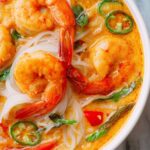
Thai Shrimp Noodle Soup Recipe
- Prep Time: 5 minutes
- Cook Time: 10 minutes
- Total Time: 15 minutes
- Yield: 4 servings 1x
- Category: Soup
- Method: Stovetop
- Cuisine: Thai
Description
This easy one-pot Thai Shrimp Soup with Noodles combines fragrant Thai red curry paste, creamy coconut milk, fresh shrimp, and tender rice noodles in a comforting and flavorful broth. Perfect for a quick, satisfying meal with vibrant Southeast Asian flavors.
Ingredients
Main Ingredients
- 2 tablespoons coconut oil
- 1 yellow onion, diced
- 1 red bell pepper, diced
- 2 cloves garlic, minced
- 1 tablespoon fresh grated ginger
- 2 tablespoons Thai red curry paste
- 4 cups vegetable broth
- 1 (14-ounce) can coconut milk
- 1 tablespoon fish sauce
- 1 pound shrimp, peeled and deveined
- 8 ounces rice noodles
- 2 tablespoons lime juice
Optional Garnishes
- Fresh chopped cilantro
- Green onions
- Thai chilies
Instructions
- Heat the oil: In a large pot, heat 2 tablespoons of coconut oil over medium heat until shimmering.
- Sauté vegetables: Add the diced yellow onion and red bell pepper to the pot and cook for 4 minutes until softened and fragrant.
- Add aromatics and curry paste: Stir in the minced garlic, grated ginger, and 2 tablespoons of Thai red curry paste. Cook for another minute until aromatic.
- Combine liquids: Pour in 4 cups of vegetable broth, 1 can (14-ounce) of coconut milk, and 1 tablespoon of fish sauce. Bring the mixture to a boil.
- Add shrimp and noodles: Add 1 pound of peeled and deveined shrimp and 8 ounces of rice noodles to the boiling broth. Cook for 3 to 4 minutes until the shrimp turns pink and opaque and the noodles are tender.
- Finish with lime juice: Stir in 2 tablespoons of fresh lime juice to brighten the flavors. Serve immediately with optional garnishes such as chopped cilantro, green onions, and Thai chilies.
Notes
- Use fresh shrimp for best flavor; frozen shrimp can be used if thawed properly.
- If you prefer a spicy kick, add extra Thai red curry paste or fresh Thai chilies.
- Rice noodles cook quickly, so be careful not to overcook to avoid mushy texture.
- For a vegetarian or vegan version, substitute shrimp with tofu and use soy sauce instead of fish sauce.
- Leftovers can be refrigerated for up to 2 days; reheat gently to prevent overcooking the shrimp.
Nutrition
- Serving Size: 1 serving
- Calories: 622 kcal
- Sugar: 5 g
- Sodium: 2293 mg
- Fat: 30 g
- Saturated Fat: 25 g
- Unsaturated Fat: 5 g
- Trans Fat: 0 g
- Carbohydrates: 59 g
- Fiber: 2 g
- Protein: 28 g
- Cholesterol: 285 mg


Leave a Reply