
There’s something irresistibly cozy and flavorful about these **Baked Satay Dumplings with Coconut Peanut Sauce Recipe** — imagine tender dumplings bathed in a creamy, slightly spicy peanut sauce that practically sings with coconut and a hint of chili. It’s a one-pan wonder that’s as satisfying as it is simple.

Jump to:
- Why You'll Love This Recipe
- Ingredients & Why They Work
- Make It Your Way
- Step-by-Step: How I Make Baked Satay Dumplings with Coconut Peanut Sauce Recipe
- Top Tip
- How to Serve Baked Satay Dumplings with Coconut Peanut Sauce Recipe
- Make Ahead and Storage
- Frequently Asked Questions:
- Final Thoughts
- Baked Satay Dumplings with Coconut Peanut Sauce Recipe
Why You'll Love This Recipe
I first stumbled on this recipe when I was craving something rich yet easy for a weekend dinner. What hooked me was how effortlessly the oven does the work—no stovetop babysitting or complicated steps. Plus, the sauce is where all the magic happens, coating each dumpling with creamy, dreamy goodness.
- One-pan convenience: Less cleanup, more flavor as the dumplings steam and bake right in the sauce.
- Flavor-packed sauce: The coconut peanut sauce has the perfect balance of creamy, spicy, and umami notes.
- Versatility: Whether you prefer pork, chicken, or veggie dumplings, this recipe works beautifully with them all.
- Quick and satisfying: Ready in under 30 minutes, it’s perfect for busy weeknights or letting your oven do the heavy lifting on a chill weekend.
Ingredients & Why They Work
Each ingredient in this Baked Satay Dumplings with Coconut Peanut Sauce Recipe plays a key role — the interplay of creamy peanut butter and rich coconut milk creates the sauce’s silky base, while gochujang and sweet chili jam add just the right kick and depth.

- Peanut butter: Use smooth peanut butter for that luscious, creamy texture that binds the sauce.
- Gochujang paste: This Korean chili paste gives a smoky heat that’s complex and slightly sweet.
- Sweet chili jam: Adds a touch of sweetness with subtle tang, balancing the spice and richness.
- Soy sauce: Brings savory umami to deepen the flavor profile.
- Fish sauce: Adds salty umami brightness—don’t skip it even if subtle!
- Garlic & ginger: Freshly crushed and grated for that vibrant aromatic punch.
- Sesame oil: Adds a toasty finish that complements the peanut flavors beautifully.
- Coconut milk: The silky richness that makes the sauce irresistibly creamy and slightly sweet.
- Frozen dumplings: Pork, chicken, or veggie—your choice! Frozen ones cook perfectly right in the sauce.
- Edamame beans & bok choy: They add fresh color, crunch, and a healthy green boost.
- Chili oil: Drizzled at the end for an extra pop of spice and aroma.
- Sesame seeds, scallions, cilantro, peanuts, crispy onions, lime wedges: Fresh garnishes that bring texture, brightness, and contrast with every bite.
Make It Your Way
I love this dish as it is, but I often switch up the dumplings or the heat level to suit my mood or what’s in the pantry. It’s a recipe that invites your own spin without losing that core satay charm.
- Variation: Once, I swapped out the gochujang for a little extra sweet chili sauce and added fresh basil—totally delicious and a bit lighter! If you’re avoiding fish sauce, a splash of soy sauce or tamari makes a great substitute.
Step-by-Step: How I Make Baked Satay Dumplings with Coconut Peanut Sauce Recipe

Step 1: Whisk Together the Flavorful Satay Sauce
Start by preheating your oven to 400°F (200°C). Then, in your baking dish or ovenproof skillet, whisk together the peanut butter, gochujang, sweet chili jam, crushed garlic, grated ginger, soy sauce, fish sauce, and coconut milk until smooth and creamy. This is where all the magic happens—the sauce is rich, a little smoky, a little sweet, and just spicy enough to keep things exciting. Don’t rush this part; a well-mixed sauce guarantees even flavor.
Step 2: Add Your Veggies and Dumplings
Next, toss the frozen edamame beans and chopped bok choy straight into the sauce and stir them through. The freshness of the greens balances all that sweetness and richness. Then arrange your frozen dumplings snugly in a single layer over the sauce. This part is key — place them so they're roughly half-covered by the sauce; this keeps them moist and juicy as they bake.
Step 3: Bake Until Bubbling and Delicious
Pop the whole pan into the oven and bake for about 20 minutes. You’ll want to see the sauce bubbling and the dumplings cooked through, which you can usually tell when their edges turn slightly golden. For an extra crispy finish, I like to broil the dumplings for 2-3 minutes at the end—just keep an eye to make sure they don’t burn!
Step 4: Garnish and Serve Bright
Once out of the oven, drizzle the dumplings with chili oil, then scatter the sesame seeds, chopped scallions, cilantro leaves, crushed peanuts, and crispy onions liberally on top. Finish it off with a squeeze of fresh lime juice right before serving to brighten the rich flavors. It’s this fresh contrast that elevates the dish to next-level yum.
Top Tip
From my experience, the secret to perfect Baked Satay Dumplings with Coconut Peanut Sauce Recipe lies in getting the right balance between the dumplings and the sauce—moist but not soggy, richly flavored but not overwhelming.
- Choose your baking dish wisely: Use a medium-sized, deep dish to keep the sauce from drying out or spreading too thin.
- Don’t thaw the dumplings: Bake them frozen so their texture stays tender and plump in the sauce.
- Broil for the perfect finish: A quick 3-minute broil crisps the tops without drying the insides.
- Adjust the chili levels last: Drizzle chili oil after baking so you control how spicy each plate gets.
How to Serve Baked Satay Dumplings with Coconut Peanut Sauce Recipe

Garnishes
I keep it simple but lively—crushed peanuts for crunch, fresh cilantro and scallions for that herbal zing, crispy fried onions for extra texture, and a generous sprinkle of sesame seeds to toast on your palate. A squeeze of lime at the finish isn’t just a nicety; it truly brightens every bite.
Side Dishes
Since this is pretty hearty and saucy, light sides complement it best. I often serve it with steamed jasmine rice to soak up the sauce, or a crunchy Asian cucumber salad tossed with rice vinegar for a refreshing contrast.
Creative Ways to Present
For a party or fancy night in, I’ve arranged these dumplings on a large platter with little bowls of extra chili oil, lime wedges, and fresh herbs for guests to customize. It’s fun, interactive, and looks way more impressive than the effort needed!
Make Ahead and Storage
Storing Leftovers
After enjoying a feast, I let any leftovers cool completely before transferring them to an airtight container. Stored in the fridge, they last 2-3 days. The sauce thickens up, so you may want to stir in a splash of coconut milk or water when reheating.
Freezing
I’ve frozen cooked dumplings in the sauce, and it works fine—just be sure to cool thoroughly and use a freezer-safe container. When you’re ready, thaw overnight in the fridge and gently reheat on the stove or microwave, adding a little liquid to loosen the sauce.
Reheating
To bring leftovers back to life, I warm them slowly in a pan on low heat with a splash of coconut milk or water to keep the sauce creamy. Avoid overheating, so your dumplings stay tender instead of rubbery.
Frequently Asked Questions:
Absolutely! Fresh dumplings work great, too. Just reduce the baking time slightly and keep an eye on them to avoid overcooking. Frozen dumplings are just convenient and hold their shape well in the sauce.
The sauce has moderate heat thanks to the gochujang and sweet chili jam, but you can easily adjust the spice by adding less gochujang or skipping the chili oil drizzle. If you like it hotter, add extra chili oil at the end!
Yes! Use vegetable-based dumplings and substitute the fish sauce with soy sauce or tamari. The rest of the ingredients are naturally vegan, making this a delicious plant-based option.
If you don’t have gochujang, you can replace it with a mix of chili paste or sriracha plus a little miso paste or soy sauce to mimic the savory depth. It won’t be exactly the same, but still tasty and satisfying.
Final Thoughts
Honestly, the Baked Satay Dumplings with Coconut Peanut Sauce Recipe has become one of my go-to easy dinners, especially when I want something comforting with a little flair and zero fuss. I think you’ll find it’s the kind of recipe you fall back in love with again and again—ready in a snap, delicious every time, and perfect for sharing around the table with friends or family. Give it a try and see how your oven can turn frozen dumplings into a saucy, saucy feast you’ll rave about.
Print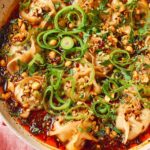
Baked Satay Dumplings with Coconut Peanut Sauce Recipe
- Prep Time: 10 minutes
- Cook Time: 20 minutes
- Total Time: 30 minutes
- Yield: 4 servings 1x
- Category: Main Course
- Method: Baking
- Cuisine: Asian
Description
These One Pan Baked Satay Dumplings are a delicious and easy meal featuring frozen dumplings baked in a creamy, coconut peanut satay sauce with an Asian-inspired blend of gochujang, sweet chili, and aromatic spices. Topped with crunchy peanuts, scallions, cilantro, and crispy onions, this dish is perfect for a quick and flavorful dinner ready in just 30 minutes.
Ingredients
Satay Sauce
- ⅓ cup smooth peanut butter
- 1 tablespoon gochujang paste
- 1 tablespoon sweet chilli jam (or sauce)
- 1 tablespoon soy sauce
- 2 teaspoons fish sauce
- 2 garlic cloves, crushed
- 1 inch piece of ginger, grated
- 2 teaspoons sesame oil
- 1 × 14oz (400ml) can of coconut milk
Main Ingredients
- 1 pack frozen dumplings (about 20 – 25, pork, chicken or veg)
- ½ cup frozen edamame beans
- 2 heads of bok choy, chopped
Toppings & Garnishes
- 3 tablespoons chili oil
- 1 tablespoon sesame seeds
- 2 scallions, finely sliced
- A handful of cilantro leaves
- 1 tablespoon of crushed peanuts
- 1 tablespoon of crispy onions
- 1 lime, sliced into wedges
Instructions
- Preheat the oven: Preheat your oven to 400°F/200°C (fan).
- Prepare the satay sauce: In a baking dish or ovenproof skillet, whisk together the peanut butter, gochujang paste, sweet chili jam, grated ginger, crushed garlic, soy sauce, fish sauce, and coconut milk until smooth and creamy.
- Add vegetables: Scatter the frozen edamame beans and chopped bok choy into the sauce and mix them through evenly.
- Arrange dumplings: Place the frozen dumplings snugly in a single layer in the sauce so that they are roughly half covered, ensuring they stay juicy during baking.
- Bake: Transfer the baking dish to the oven and bake for 20 minutes, or until the sauce is bubbling and the dumplings are cooked through.
- Optional broil for crispiness: For a golden, crispy top, broil (grill) the dumplings for an additional 3 minutes at the end of baking.
- Add toppings and serve: Drizzle the dumplings with chili oil, then scatter crushed peanuts, scallions, cilantro, and crispy onions on top. Squeeze lime wedges over the dumplings before serving and enjoy!
Notes
- This recipe is a quick way to transform frozen dumplings into a flavorful, complete meal.
- Use a 9 to 11 inch long and 3 to 4 inch deep baking dish or ovenproof skillet for best results.
- If your baking dish is larger, cover with foil while baking to prevent the sauce from drying out and keep dumplings juicy.
- The optional broil step adds a crispy texture to the dumplings; skip it if you prefer softer dumplings.
- Substitute the type of dumplings with pork, chicken, or vegetarian according to preference.
- Adjust the level of spiciness by varying the amount of gochujang and chili oil.
Nutrition
- Serving Size: 200g
- Calories: 533 calories
- Sugar: 13.7 g
- Sodium: 1226 mg
- Fat: 33.4 g
- Saturated Fat: 7 g
- Unsaturated Fat: 23.7 g
- Trans Fat: 0 g
- Carbohydrates: 38.9 g
- Fiber: 5.6 g
- Protein: 23.9 g
- Cholesterol: 30.8 mg


Leave a Reply